
“Paradise is exactly like where you are right now… only much, much better.”
– Laurie Anderson, American artist, composer, musician and film director
By Realttorney®
Indang is part of the third Growth Area, under the Cavite Enhanced Provincial Development and Physical Framework Plan 2021 – 2030, known as Metro Tagaytay or the Tourism Haven and Food Basket of the Province. This third Growth Area is composed of seven other municipalities and one city, which we will feature in subsequent articles in the future.

Why write about Indang, Cavite first? Well, aside from living here, Indang is a very interesting place. More importantly, as a real estate service practitioner, I have to become an expert in the area of opportunity I concentrate on.
Here are 6 main facts you need to know about the central upland town of Indang.
1. Indang was once a part of the Municipality of Silang, Cavite for about 70 years. Indang became a full-fledged town in 1655 when it was administratively separated from Silang to resolve the difficulties of Indangeños in transacting official business and attending religious services. Think about it. There was no East-West Lateral Road to speak of during the 1600s.
2. Indang is a historical town. During the Philippine Revolution, Indang was known by its Katipunan name “Walang Tinag.” It belonged to the Magdiwang faction of the Katipunan headed by the Supremo – Andres Bonifacio, as opposed to the Magdalo faction headed by Gen. Emilio Aguinaldo.
The Tejeros Convention was a revolutionary assembly held on March 22, 1897, in Rosario, Cavite. Presided over by Andres Bonifacio toward the end of the session, the Assembly decided to establish a central revolutionary government and elected Emilio Aguinaldo, President; Mariano Trias, Vice President; Artemio Ricarte, Captain General; Emiliano Riego De Dios, Director of War; and Andres Bonifacio, Director of the Interior.
However, Daniel Tirona questioned the election of Bonifacio as Director of the War on account that the position should be held by a lawyer. Bonifacio was insulted by this act of Daniel Tirona. Hence, he voided the results of the Convention as Supremo of the Katipunan.
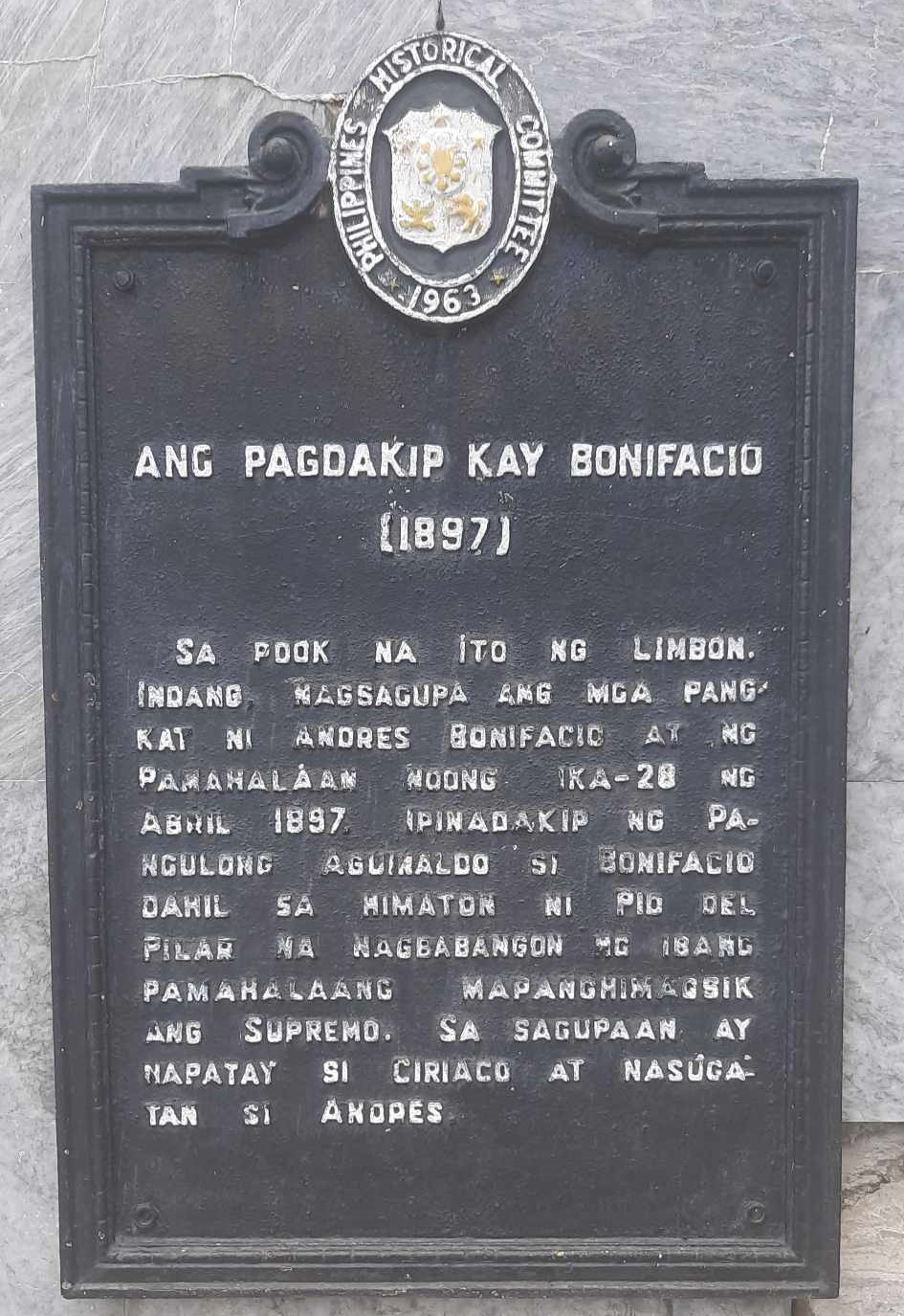
He then retreated to Indang to regroup. His arrest was ordered by the newly-elected President Aguinaldo to prevent Bonifacio from pursuing his counter-revolutionary plan to set up a separate government and army to proceed with his own plans for the revolution. Andres Bonifacio was arrested in Barangay Limbon, Indang, This is the exact place Bonifacio retreated to after nullifying the election to decide the leaders of the revolutionary government in Rosario, Cavite. The Bonifacio Shrine stands as a reminder of this historical fact.
3. Indang is a center of academic learning. In the heart of this Municipality can be found the main campus of the Cavite State University (CvSU), known as the Don Severino De Las Alas Campus.
Who was Don Severino? Don Severino De Las Alas was a prominent Indang native who was elected Secretary of Justice at the Tejeros Convention. He belonged to the Magdiwang faction of the Katipunan.
From its humble beginnings in 1906 as the Indang Intermediate School, CvSU has 11 campuses (I think… I lost count after 10) spread all over the Province of Cavite, with more than 30,000 students, 1,200 faculty and staff from all campuses, and offering close to 100 curricular programs in the undergraduate and graduate levels.
But CvSU’s crown jewel on the main campus, in my opinion, is the 5-hectare Agri Eco-Tourism Park which boasts of thousands of endemic plants and tree species. It also produces the premium Aguinaldo Blend, which is roasted and blended with Cavite Barako, Robusta, and arabica beans. It is also a Farmer’s Training Center and Technology Demonstration Farm of the Agricultural Training Institute of the Department of Agriculture.
4. Indang has one of the oldest Catholic churches in the Province of Cavite. Based on Church History, Indang was originally a chapel of Silang under the Jesuits. The church was established as a mission station of Father Angelo Armano in 1611 and became a separate parish only in 1625 under the advocacy of Pope St. Gregory the Great.

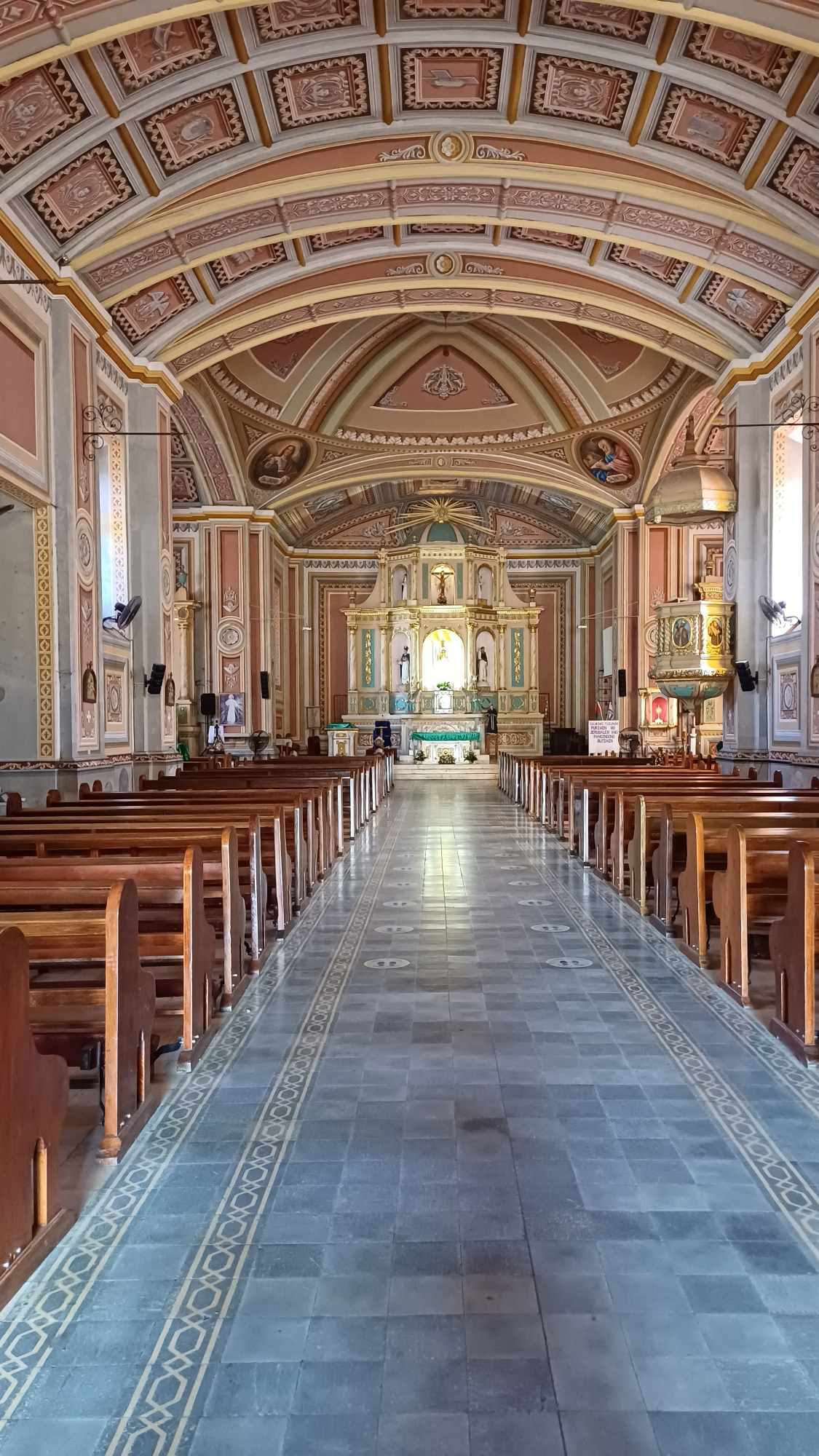
A huge part of the stone church was built during the term of Father Luis Morales from 1672 to 1676 and was finished in 1710. The church was burned during the Philippine Revolution against the Spaniards.
Curiously, despite being dedicated under the chaplaincy of St. Gregory the Great, the Parish effectively has 8 patron saints. The devotion to the Seven Archangels by Indangeños is strong. Since then, several miracles have been attributed to St. Gregory the Great and the 7 Archangels. Preparations are underway for the 400th anniversary of the parish in 2025.
5. Indang is a top food producer for the Province of Cavite. Like some of its neighbors, it is a first-class municipality. But, its main driver of municipal revenues comes from agro-business commercial farms which raise large volumes of livestock and poultry. As per the record of the municipal agricultural office, there are existing hog farms, broiler farms, layer and breeder farms – categorized as backyard, medium-scale to large-scale commercial operations.


More than 7,000 hectares of land in Indang are devoted to agriculture. Most farmers are engaged in multi-cropping farming systems. Most lands are planted with vegetables, root crops, corn, coconut, banana, coffee, pineapple, and other high-value commercial crops like dragon fruit, mangoes, cocoa, etc. As such, Indang has claimed the title of the Agri-Tourism Center of Cavite.
6. Indang is the Spring Water Capital of the Philippines. More than a dozen springwater resorts are thriving in the municipality. They become areas of fun activities during the summertime, as the cold waters provide respite to the hot and humid weather in Metropolitan Manila.
There are various resorts in Indang that people from within and outside the Province of Cavite visit during April, May, and June. Sad, some of these resorts have swimming pools right in the middle of a river, which makes these structures and their operation not compliant with the environmental laws of the country.
Numerous real estate inquiries in this part of upland Cavite are farm lots for weekend farmers Who want a second home away from the hassles of urban life or semi-retired to retired individuals looking for a shift in their lifestyle. But in my previous article, I argued that Metro Tagaytay is more than just a haven for retirees. Young professionals in the Gig Economy are perfect to invest for their future homes and raise a family in this 3rd Growth Area of Cavite.
Other real estate-related inquiries are possible sites for posh and not-so-posh event places and/or resort businesses near the various rivers and tributaries crisscrossing the Municipality of Indang. In addition, real estate developers find Indang as an ideal environment to set up farm lot subdivision projects.
And, this is the only type of project that is allowed for now considering the 10-year moratorium on converting agricultural land for residential purposes. The moratorium was imposed last 2018. So, we are halfway through. After another 5 years, various types of residential development projects may be allowed once again in Indang.
To conclude, there are vast opportunities for real estate investment in our quaint community. But, make no mistake this is a rural community. We are far enough from Mega Manila to enjoy fresh air and low prices of agricultural produce.
Yet, with the presence of nearby shopping malls and other so-called “urban amenities,” we really like where we live and we can say that we have found our paradise in this part of Cavite. In the words of Agritorney, “OWN A FARM. MAKE IT YOUR PARADISE.“
——-
Atty. Jojo is a real estate attorney, an estate planning attorney, a licensed real estate broker, and a PRC-accredited Lecturer/ Speaker for Training Programs in Real Estate. He is committed to helping new and veteran real estate service practitioners be well-informed of the latest laws, rules, regulations, and information relevant to the real estate service sector.
Discover more from Realttorney®
Subscribe to get the latest posts sent to your email.
 Realttorney®
2 thoughts on “Six Main Facts to Know About the Historic Town of Indang, Cavite”