
“There is something fundamentally wrong in treating the Earth as if it were a business in liquidation.”
– Herman E. Daly, American Economist
(Part 1 of 4)
By Realttorney®
On April 24, 2025, I attempted to answer this question during the Continuing Professional Development (CPD) seminar sponsored by my mother chapter, REBAP Metro Tagaytay.
Real estate service practitioners (RESPs) in the Philippines occasionally encounter a peculiar situation: a parcel of land or a piece of property remains registered under the name of a corporation that no longer operates. This scenario prompts a legal and practical question: Can a “dead” corporation still sell its real estate? If so, how?
For those who missed the CPD Event, this article explores the legal framework and procedures involved in the sale of real estate assets owned by a dissolved corporation, often referred to as a “dead” corporation. Drawing from the Revised Corporation Code of the Philippines (Republic Act No. 11232), relevant SEC regulations, and Supreme Court jurisprudence, we offer a proficient guide for real estate service professionals, lawyers, and estate planners alike.
The Rise and Fall of Family Corporations. During the late 1970s up to the 1990s, it was common for Filipino families to form corporations as vehicles for managing their businesses and real estate assets. This strategy offered benefits such as:
- Easier access to capital through institutional financing
- Trust and control within the family structure
- Efficient estate planning and intergenerational wealth transfer
However, many of these corporations eventually became inactive or failed to comply with the annual regulatory filings, such as audited financial statements (AFS) and general information sheets (GIS). As a result, they were either administratively dissolved by the Securities and Exchange Commission (SEC) or voluntarily terminated by their shareholders.
The assets of these dissolved corporations – including real estate – remain under their name on record, leading to legal complexities when a sale is contemplated.
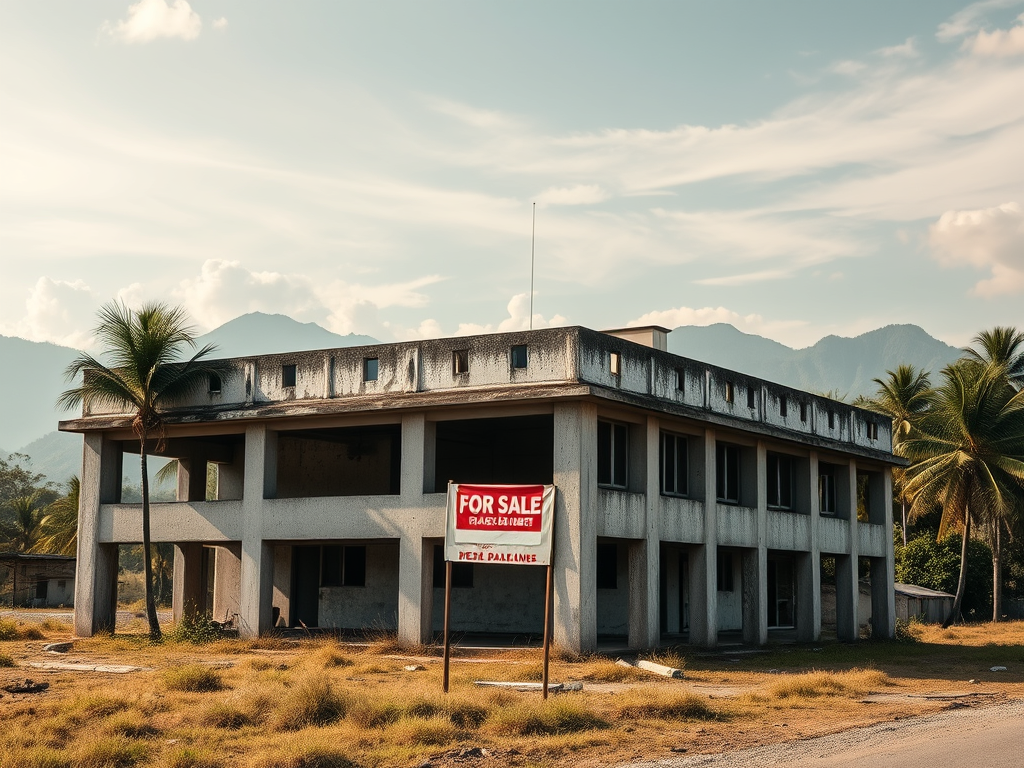
What Does It Mean for a Corporation to “Die”? Under Philippine law, the “death” of a corporation refers to the termination of its juridical existence. This may occur in several ways:
- Non-organization or non-operation. If a corporation fails to formally organize or start its business within two (2) years under Batas Pambansa Blg. 68 [now five (5) years under R.A. No. 11232], it is deemed dissolved.
- Inoperative status. If a corporation becomes continuously inactive for five (5) consecutive years, it may be placed under delinquent status, and if it fails to comply with SEC requirements within the next six (6) months, the SEC may revoke its certificate of incorporation.
- Non-filing of reports. Failure to file financial statements or GIS for three instances within five years also results in delinquency and possible revocation under SEC Memorandum Circular No. 19, Series of 2023.
Once a corporation’s certificate of incorporation is revoked, it can no longer conduct business as a juridical entity, except for one purpose: liquidation.
Understanding Dissolution vs. Liquidation. To appreciate how a “dead” corporation may still sell its real estate, we must distinguish between two key concepts.
First, DISSOLUTION. Dissolution is the legal termination of the corporation’s existence. It is the formal end of its corporate life and may be: (1) voluntary, initiated by the shareholders or board of directors; or (2) involuntary, imposed by the SEC for violations such as inoperation or failure to file reports.
It should be noted that once dissolved, a corporation ceases to exist for regular business purposes.
Second, LIQUIDATION. Liquidation is the process that follows dissolution. It involves: (1) settling debts and liabilities; (2) collecting receivables; (3) disposing of corporate properties; and (4) distributing remaining assets to shareholders.
The Revised Corporation Code (Section 139) provides that a corporation remains a body corporate for three years from the effective date of dissolution, but only for liquidation purposes. It cannot resume business operations, but it may still convey or sell property as part of winding up its affairs.
The Three-Year Winding-Up Rule
According to Section 139 of the Revised Corporation Code, “Every corporation whose corporate existence is terminated in any manner shall nevertheless remain as a body corporate for three (3) years… to settle and close its affairs, dispose of and convey its property, and distribute its assets…”
This provision ensures that the corporation’s residual obligations can be fulfilled and that its assets are not stranded. It allows the appointment of liquidators or trustees to manage the sale of properties, including real estate.
However, once the three-year winding-up period expires, the corporation no longer retains any capacity to act – unless its remaining assets were previously transferred to trustees.
Why Is This Relevant to Real Estate Brokers and Other Professionals? In the real estate service practice, professionals often encounter situations where:
- A parcel of land is titled under a long-dissolved corporation.
- There is no designated liquidator or board resolution authorizing the sale.
- The three-year liquidation window has already lapsed.
Understanding how to legally facilitate the sale of such properties is not only crucial for compliance but also for protecting buyer interests and the integrity of licensed real estate brokers.
In the next part of this series, we will explore the step-by-step procedure for selling real estate owned by a dissolved corporation, depending on whether the transaction occurs within or after the three-year liquidation period.
Stay tuned for Part 2: “Step-by-Step Guide to Selling Real Estate Registered in the Name of a Dissolved Corporation.”
——-
Atty. Jojo is a real estate attorney, an estate planning attorney, a licensed real estate broker, and a PRC-accredited Lecturer/ Speaker for Training Programs in Real Estate. He is committed to helping new and veteran real estate service practitioners be well-informed of the latest laws, rules, regulations, and information relevant to the real estate service sector.
Discover more from Realttorney®
Subscribe to get the latest posts sent to your email.
 Realttorney®
One thought on “How Can a “Dead” Corporation Sell Its Real Estate in the Philippines?”